what kind of gravel to use for driveway
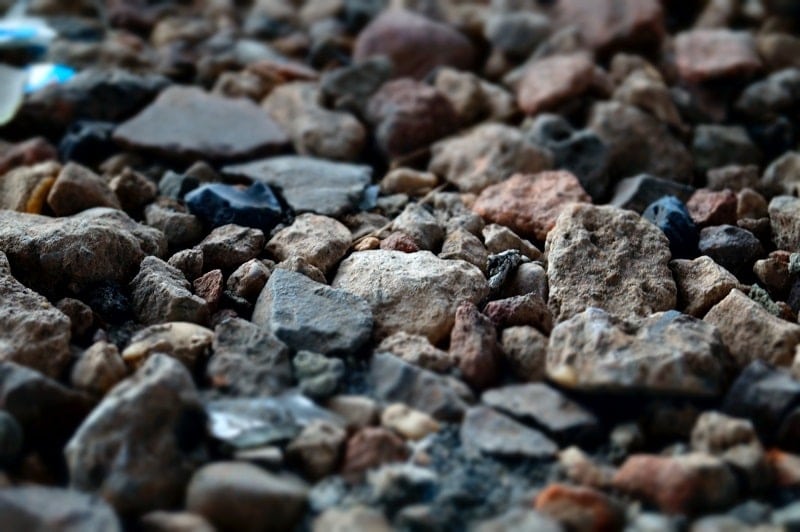
Choosing the right gravel for your driveway can mean the departure between your driveway existence washed away or all the same standing for years to come. In that location are many types and sizes of gravel. In most cases, you'll use more than 1 type of gravel together to create the perfect driveway. Some of these types are used all the fourth dimension, while others are only used occasionally.

The nine Types of Gravel for Driveways:
1. #iii Gravel
Every type of driveway is going to need base gravel. This gravel is commonly larger and is made to create a solid foundation and encourage drainage. It is what all the other gravel sits on superlative of. The most popular choice is the #3 stone, which is about one to two inches in bore. This is the "average gravel" that you're probably used to seeing.
To cutting costs, some people simply use this blazon of gravel. However, we recommend augmenting it with other rocks too. It is fabricated to be the foundation, not the only stone on there. Y'all should lay a layer of virtually four inches thick of this gravel onto your driveway. This ensures y'all have proper drainage, as there is a lot of room betwixt these larger rocks for the water to go.
This gravel is made through a motorcar crushing rock. For this reason, the pieces are often irregular and tin be quite abrupt. Information technology isn't the all-time type of gravel to walk on past any means.
Pros
- Cheap and plentiful
- Creates a solid foundation
- Expert drainage
Cons
- Irregular sizing
- Non pleasant to walk on
2. Item #4 Gravel
"Item #four" might not seem like a very marketable proper noun for gravel, simply this type of gravel is besides popular equally a foundation. It is a mixture of golf game-brawl-sized stones, stand, and clay. Information technology makes more of a solid layer than #3 gravel since it has the dirt and sand mixed in.
This gravel comes in many different subtypes. This typically refers to what the larger pieces of stone are made of. In the cease, it doesn't have a significant outcome on the actual part of the gravel. Hither is a quick rundown of some of the costs:
- Recycled Item #4: Consists of recycled physical, blacktop, brick, rocks, and other stones
- Quarry Item #4: Limestone
- Gray Particular #4: night grey rock
- Crushed Bluestone Item #4: Dark blue-grey stone
Pros
- More solid than #3 gravel
- Comes in many subtypes
Cons
- Mainly used as a foundation
3. Crushed Stone #57 Gravel
Usually, crushed rock #57 is used as the middle layer of a gravel driveway. It is typically golf-ball-sized crushed stone, hence the proper noun. It is made from automobile-crushed stone and is frequently used in many dissimilar sorts of landscaping projects. The rock's size and shape are suitable for drainage and preclude the gravel from getting stuck together, which tin can be a astringent problem with other stone types.
Otherwise, this rock is pretty uncomplicated.
Cons
- Only used as a middle layer
4. Crushed Stone #411
This is a small stone that is used along the top of the driveway. It is made of fibroid stone dust and smaller bits of gravel. It includes crushed stone #57 in it equally well. The rocks and dust mix, creating somewhat of a solid surface on top. Information technology's a surface that can stand upwards to heavier vehicles, which is precisely what you need for a driveway.
Of course, you lot tin can't just employ this blazon of gravel, every bit it doesn't provide fantabulous drainage. It is usually but used as a tiptop layer.
Pros
- Creates a solid top surface
- Can withstand heavy traffic
Cons
- Poor drainage
- Should just exist used as a top layer
5. Crusher Run
Crusher Run is a rarer type of gravel used for driveways. It is a blend of tiny crushed stone and stone dust. It usually has more than dust in it than smaller stones when compared to other types of superlative-level gravel. As it settles, the dust sinks into the infinite between the rocks, creating a shine and solid surface.
This type of gravel does not drain well in the least. For this reason, it must be slightly higher on the sides than in the center. This will ensure that the rainwater drains properly off of the route and doesn't wash everything away. It takes a bit more than skill to lay than other options.
Pros
- Creates a shine and solid finish
Cons
- Doesn't bleed well
- Takes skill to apply
half-dozen. Pea Gravel
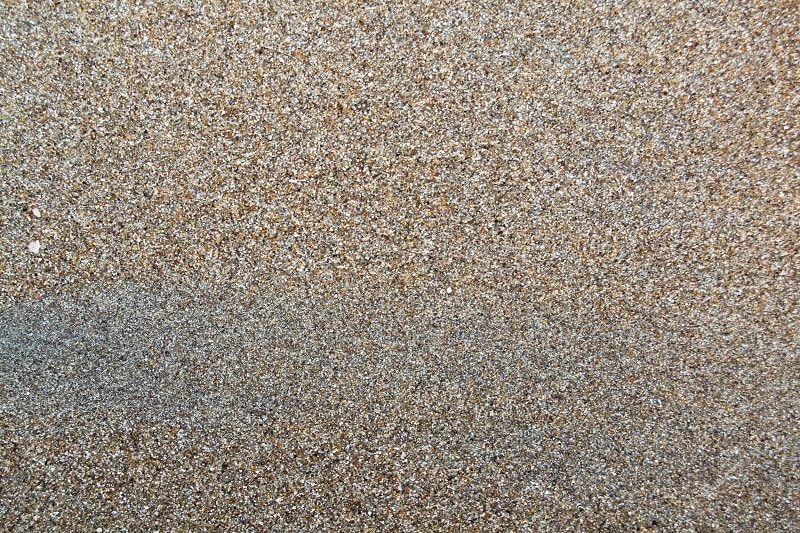
This sort of gravel is designed to be more aesthetically pleasing than other options. It is made of weathered stones that are smooth, pocket-size, and rounded. It is a suitable pinnacle layer and more comfortable to walk on than other options.
At that place are many different colors available for this sort of gravel, which isn't something you can say about most gravel we've discussed. It is much more attractive than other options, though it may be a bit more expensive. Furthermore, they won't lock together as neatly as irregularly shaped gravel will.
Pea gravel is more than likely to move around as you lot bulldoze over information technology and migrate to other areas of your yard.
Pros
- Looks nice
- Many color options
Cons
- Slightly more expensive
- Will migrate to other areas
7. Jersey Shore Gravel
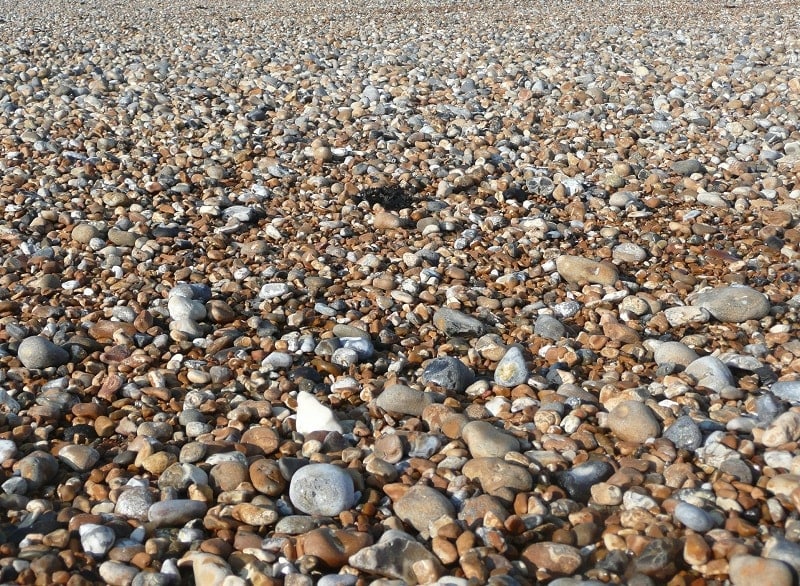
Unlike about types of gravel, this gravel has a yellowish tint. It is composited of many different shades of gold, brownish, and white. It looks a lot like beach sand, which is probably where information technology gets its name from. Information technology is pop in beach areas for this reason.
Information technology is very similar to pea gravel but is a unique color. Information technology requires driveway bordering or edging to go on it in place.
Pros
- Aesthetically pleasing
viii. Marble Fries
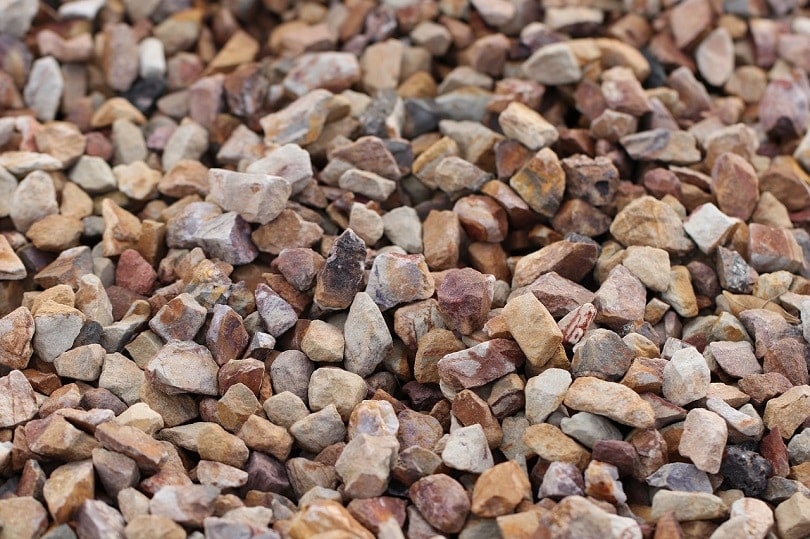
These white chips are very aesthetically pleasing. They shimmer in the sunlight and have a considerably different appearance than usual gravel. It is more elegant and may be suitable for your home, depending on your landscaping.
The main downside is that they cost substantially more than than other options. They also aren't equally practical and require edging material to go on them from leaving the driveway. Plus, they tend to wash away often, which means you'll need to add more as the years become by.
Cons
- Expensive
- Requires edging to continue it in place
9. River Rock
Equally y'all might expect, this type of gravel is equanimous of river rocks. The stones are rounded and somewhat polished. Oftentimes, they come from actual river beds. This is not the best material for the top layer of a driveway, as they will shift significantly under the weight of a heavy vehicle.
They can be used as an attractive edging material, though. They do an splendid job of keeping other, smaller pieces of stone in place.
Pros
- Attractive await as edging material
- Keep smaller pieces of gravel in place
Cons
- Not for peak surfaces
- Come across Also:6 Alternatives to Gravel Driveways: Pros & Cons
Featured Epitome Credit: Jan Ranft, unsplash
Contents
- i The ix Types of Gravel for Driveways:
- 1.1 1. #3 Gravel
- 1.2 2. Detail #4 Gravel
- 1.3 3. Crushed Stone #57 Gravel
- i.4 4. Crushed Stone #411
- 1.5 5. Crusher Run
- i.vi half dozen. Pea Gravel
- 1.vii 7. Jersey Shore Gravel
- 1.eight 8. Marble Fries
- ane.9 9. River Rock
Source: https://housegrail.com/best-types-of-gravel-for-driveway/
0 Response to "what kind of gravel to use for driveway"
Post a Comment