How to Upload Schema Script Onto Website

The importance of schema.org has significantly grown in the SEO globe since its introduction in 2011. Schema.org is a collection of schemas for structured information markup (sometimes called "schema markup") that helps search engines better understand content on websites. Implementing this markup on a site tin can besides improve how that site'south listings announced in SERPs.
By properly implementing structured data markup from schema.org, you can gain a competitive reward, increase click-through charge per unit, drive additional traffic and cost-finer improve organic search results.
One way to implement schema markup is by directly tagging the HTML code on your web pages. However, this requires two things:
- Some basic coding cognition
- CMS (Content Direction System) admission and/or FTP (File Transfer Protocol) access
The challenge is that often, SEOs don't have the required coding skills, and many companies accept strict policies on who tin access their site'southward website files.
No worries. This is where Google Tag Manager comes in handy.
What is Google Tag Manager?
Google Tag Director is a free tool that allows marketers to add together or update tags without having to know any website coding (or bother someone who does). In this case, we're using information technology to add a snippet of code to the site — our structured data markup — without really editing whatever of the website code.
Following are eight simple steps to add together schema markup to your website using Google Tag Manager. Specifically, in the example below, I testify how to add together organization schema markup that uses JSON-LD encoding. You lot can learn more about all of the various types of encoding that schema supports here.
Please notation: The steps beneath assume you already accept Google Tag Manager set up.
Step i: Create JSON-LD markup
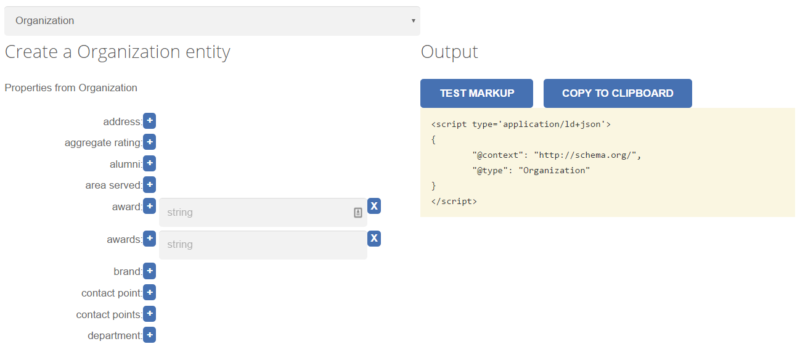
If you do not have any JSON-LD encoding knowledge, then caput on over to SchemaApp.com to use their JSON-LD schema generator tool. All you have to do is enter the properties y'all desire to include in your schema markup (some are mandatory), so copy the JSON-LD code to your clipboard.
Step 2: Create new Custom HTML Tag
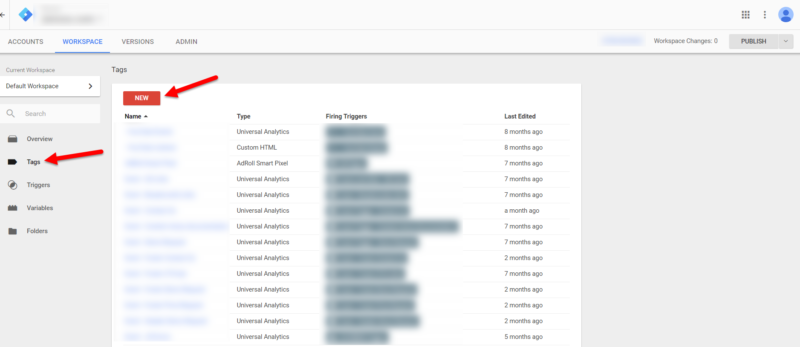
Create a new custom HTML tag in Google Tag Director and name it something descriptive, similar: "Organisation Schema Markup."

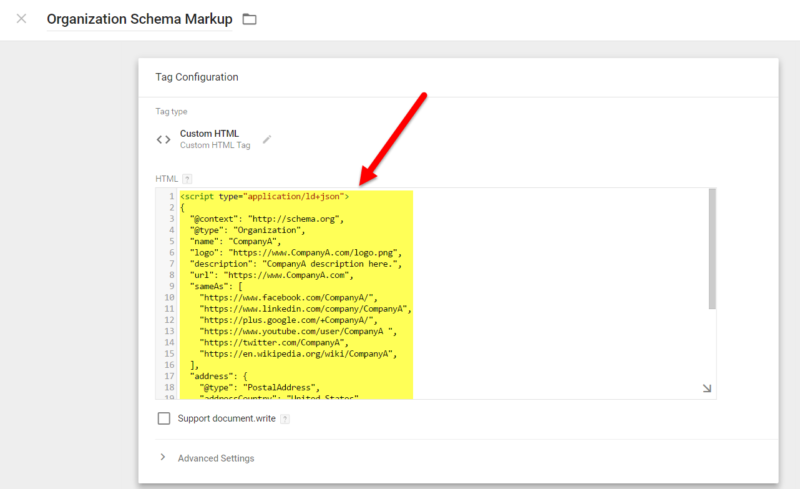
Step three: Paste JSON-LD markup into the Custom HTML text box
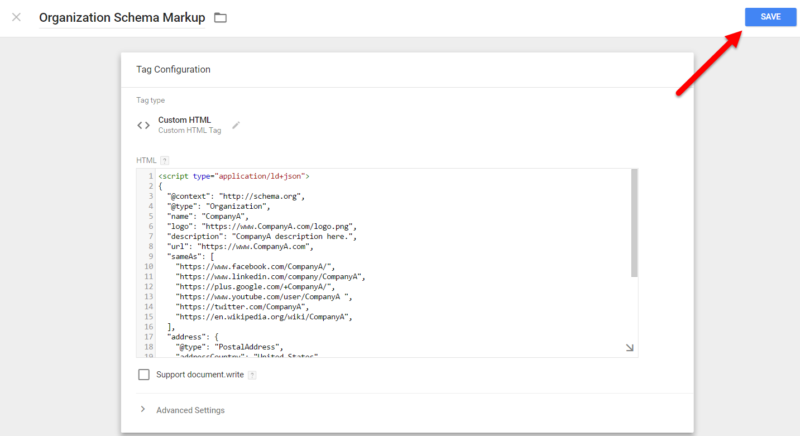
Stride 4: Salvage your Custom HTML tag
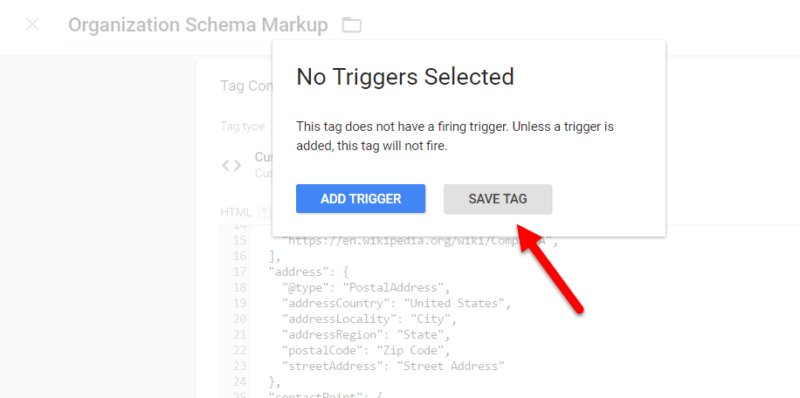
Click the blue "salve" push on the top correct-manus corner of your screen. A pop-upwards bulletin will appear stating "No Triggers Selected," only go ahead and click the gray "save tag" push.
Stride five: Create new trigger for Page Views
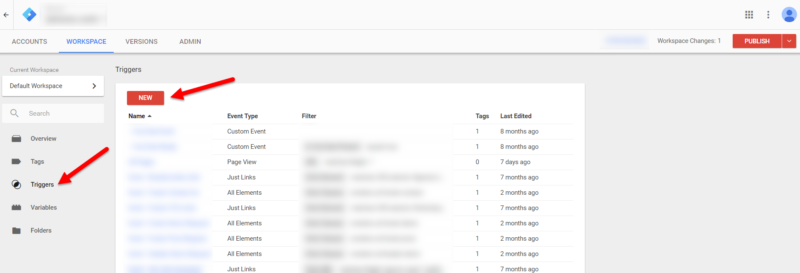
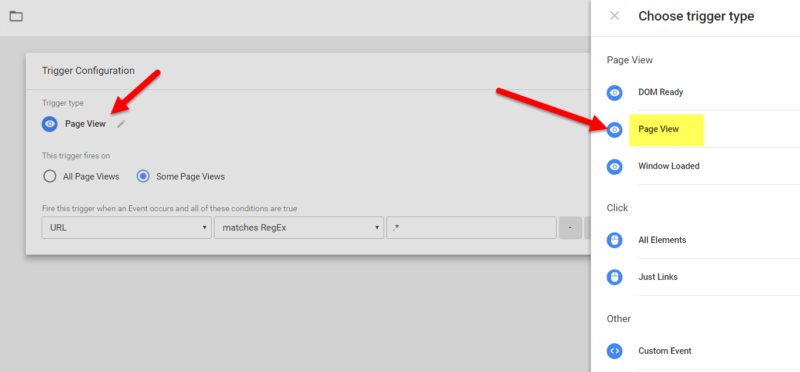
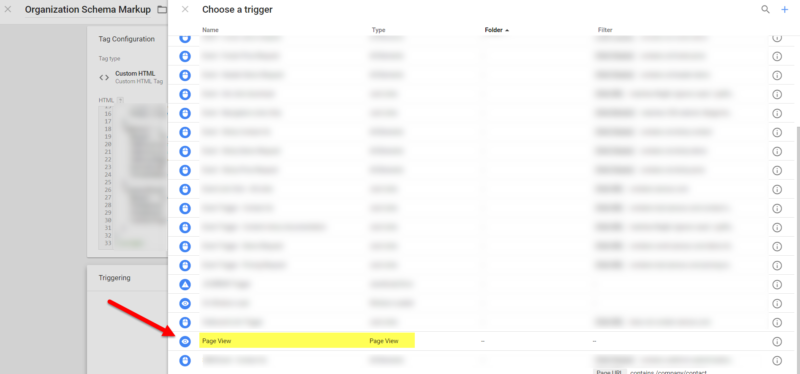
Next, you will need to create a new trigger for your tag to fire on. You'll desire to select the page views trigger from the list on the right-hand side of your screen. Proper noun the trigger "Folio View." You tin can apply this trigger for other tags, too (tags that crave page views in guild to fire).
Step 6: Configure 'Page View' trigger
Next, you will need to configure the page views trigger that y'all but created and so that it fires on all page views, then click "save."

Pace vii: Connect 'Page View' trigger to your schema markup tag
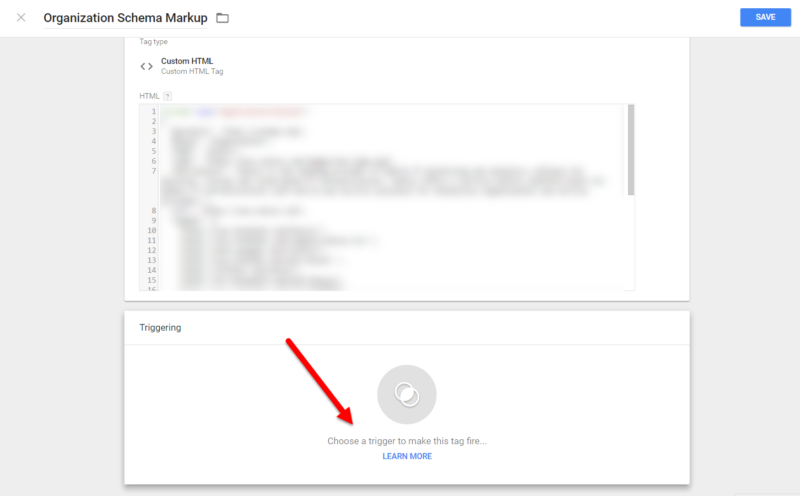
Open the Arrangement Schema Markup custom HTML tag that you created in stride 2, cull the "Folio View" trigger to make the tag fire, then click the bluish "save" button.
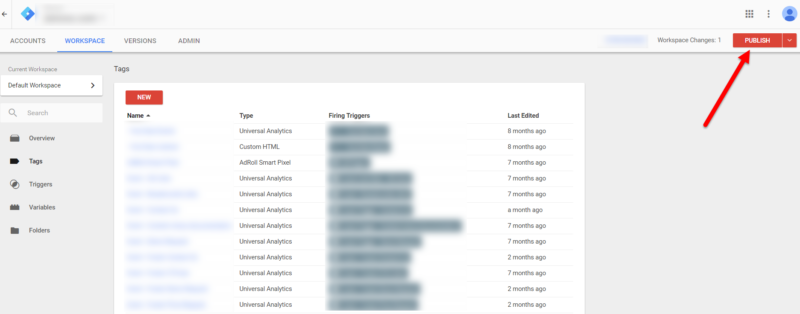
Step 8: Publish your Google Tag Managing director container
Click the red "publish" button in the top right-hand corner.
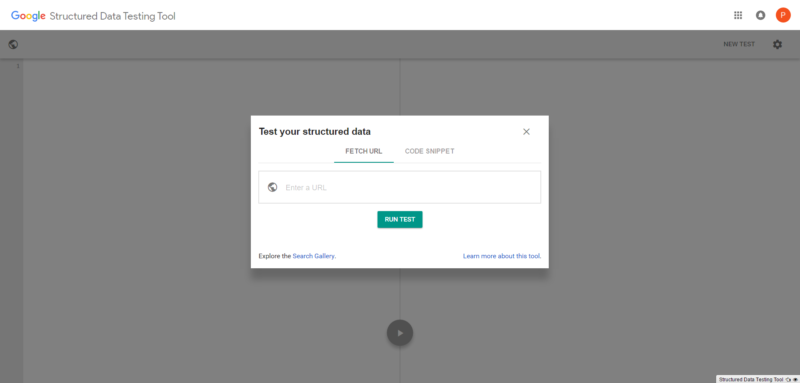
Step 9: Test your markup using Google'due south Structured Information Testing Tool
Finally, you'll want to examination your schema markup using the Structured Data Testing Tool to make sure it validates.
Summary
I encourage all marketers to capitalize on the potential benefits provided by structured data markup. Even if you're not familiar with the required HTML code, or if you can't access the needed web files, you can take advantage of this simple implementation method using Google Tag Manager.
Structured data markup is an important aspect of any comprehensive SEO solution. I recommend that yous implement the schema types that are most applicable to your concern. This volition likely provide a competitive edge in the SERPs, and it is a toll-effective fashion to boost your organic search results.
Opinions expressed in this article are those of the guest author and non necessarily Search Engine Land. Staff authors are listed hither.
New on Search Engine Country
About The Author

Bryan Stenslokken is an established SEO and Analytics expert at SmartSearch Marketing, a B2B Digital Marketing Agency specializing in need generation and lead direction solutions for B2B companies. He graduated from one of the height-ranked individual colleges in the United States, Maryville University, with a Available of Science in Internet Marketing. Bryan has extensive feel working in healthcare, tourism, fiscal services, software and manufacturing industries.
Source: https://searchengineland.com/add-schema-markup-site-using-google-tag-manager-272516
0 Response to "How to Upload Schema Script Onto Website"
Post a Comment